Wave Energy
The future of energy, or a tarpit idea that traps inventors and investors?
"Coal, gas and oil will not be the three kings of the energy world forever. It is no longer folly to look up to the sun and wind, down into the sea's waves."
The Economist, October 7, 1995
In May 2026, a startup called Panthalassa closed a $140 million funding round. Among the investors: Peter Thiel, co-founder of PayPal and Palantir, and Facebook's first outside investor. The reason? A network of floating devices in the middle of the Pacific that convert the kinetic energy of waves into electricity to power AI processors right on the platform itself.
On the company's site: “The open ocean is Earth's largest and most power-dense renewable energy resource. We're harnessing that resource to produce the cheapest energy on the planet for clean compute at sea and renewable fuels to shore.”
Back in 2007, in my Diploma Thesis at the School of Civil Engineering of the National Technical University of Athens (“Wave Energy Recovery and its Integration into the Hybrid Power Station of Ikaria”), I had catalogued 18 devices and 17 companies wrestling with the same question: how do you tame the waves and how do you turn that into a viable business?
Nineteen years later, a simple curiosity took hold. Of the companies I had catalogued back then, which survived? Which changed course? And which simply... vanished?
This article is the answer, in three parts. First, the original 2007 record, exactly as I had it then. Then, what became of those companies today. And finally, which new players entered the game.
Part I — The 2007 Map
Eighteen wave energy recovery devices from around the world, as I had catalogued them at the time, with a short technical description and their development stage.
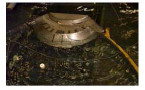
Wave Dragon - Wave Dragon ApS
Denmark
A floating converter with a pair of semi-submerged reflector walls that direct waves via overtopping into an internal reservoir housing water turbines.
2007: Prototype installed at Nissum Bredning (March 2003); damaged in a storm in 2005; reinstalled in April 2007.
Pelamis - Ocean Power Delivery Ltd. (Pelamis Wave Power)

Scotland
A series of cylindrical sections joined by hinges; the relative motion from wave action generates electricity, transmitted to shore via a subsea cable.
2007: Full-scale prototype at EMEC, Orkney (2004); the first Pelamis wave farm (4 units) announced.
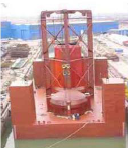
Archimedes Wave Swing - AWS BV
Netherlands
A submerged installation whose upper section moves due to wave-induced pressure differential; the motion is converted to electricity via magnet generators.
2007: 2 MW prototype tested June 2004 off northern Portugal for six months; smaller-scale testing continuing.
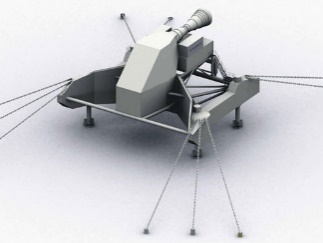
Energetech Oscillating Water Column - Energetech Australia Pty Ltd.
Australia
A nearshore oscillating water column (OWC) device with two parabolic focusing walls to maximise energy capture.
2007: Permanent installation at Port Kembla, December 2006; still under study.
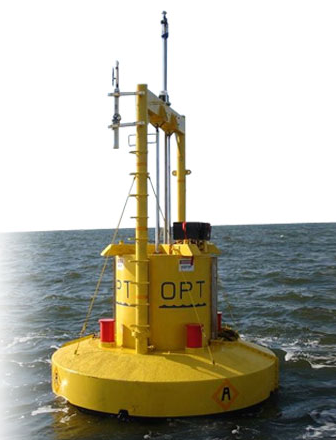
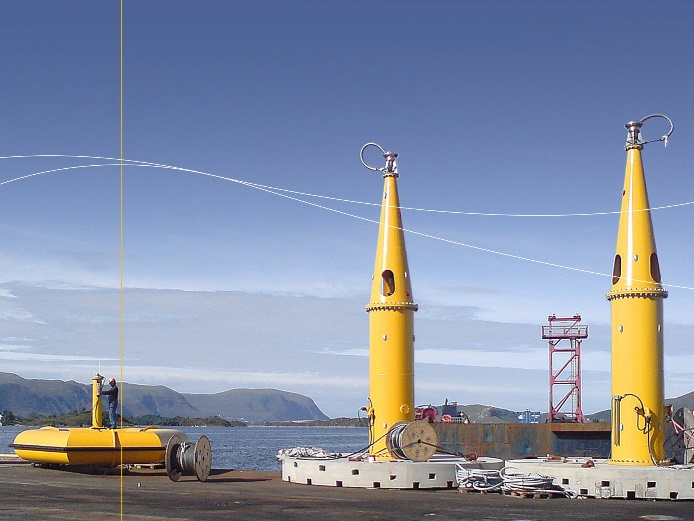
PowerBuoy - Ocean Power Technologies, Inc.
USA (New Jersey)
A fully submerged converter fixed-moored to the ocean floor; wave motion drives an internal piston that powers a generator.
2007: First installation at a naval base in Hawaii, November 2003; experimental units in Spain and New Jersey (2005–06).
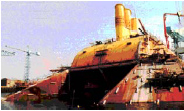
OSPREY - Wavegen
United Kingdom
An OWC device submerged at a nominal 15 m depth, incorporating a wind turbine.
2007: First deployment attempt at Dounreay failed — the device couldn't even be installed on site; a second design (OSPREY2) under scale-tank study.
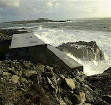
LIMPET - Wavegen
United Kingdom
A nearshore OWC device with a recovery chamber angled at 40° to the horizontal.
2007: Installed on the Isle of Islay since 2000; under continuous study.
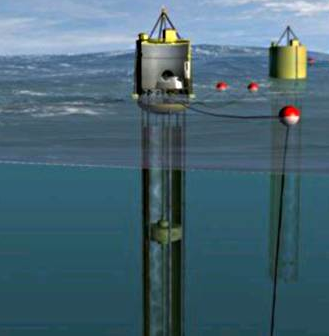
AquaBuoy 2.0 - Finavera Renewables
Canada
A fully submerged vertical tube open at both ends; vertical motion forces water in and out, driving a piston connected to pumps.
2007: Successful deployment, September 2007, Newport, Oregon, following earlier AquaBuoy trials.
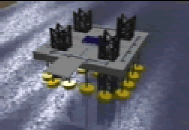
CES WavePump - Ocean Motion Int'l.
USA (Oregon & Colorado)
A floating platform combining electricity generation, desalination, and hydrogen production.
2007: Experimental stage.
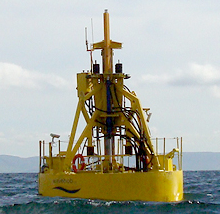
Wavebob - Duquesne Environmental Limited
Ireland
A floating point absorber that harvests wave energy without submerging.
2007: First successful full-scale deployment, March 2006, Galway Bay.
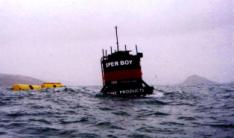
Sperboy - Embley Energy Ltd.
United Kingdom
A floating buoy with a vertical tube open at the bottom; seawater oscillates inside it, driving pistons.
2007: 1:5 scale experimental model, University of Plymouth, 2001.
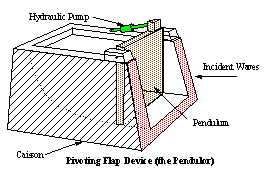
Pendulor - Muroran Institute of Technology & Cold-Region Port and Harbor Research Center
Japan
Wave action oscillates a chamber wall; the energy is transferred to hydraulic pumps.
2007: Under research by the Muroran Institute for over 15 years.
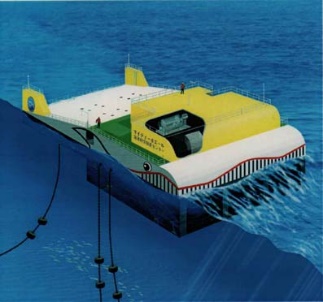
Mighty Whale - Japan Marine Science and Technology Center (JAMSTEC)
Japan
A floating device with three OWC chambers, absorbing most of the incident wave energy.
2007: 50×30 m prototype deployed at Gokasho, 1998; no newer information at the time of recording.
PS Frog - Lancaster University
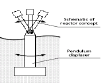
United Kingdom
A fully submerged point absorber with a large floating base and a "paddle"; the relative motion between the two generates energy.
2007: Extensive theoretical work and tank testing completed; no immediate deployment planned.
Seadog Pump - Independent Natural Resources
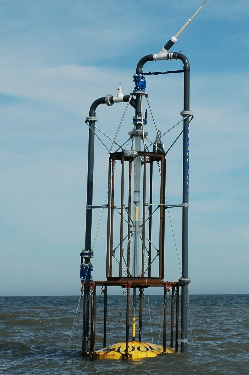
USA (Minnesota)
A point absorber where the vertical motion of a platform activates a hydraulic piston.
2007: Under scaled experimental study.
Floating Wave Power Vessel - Seapower
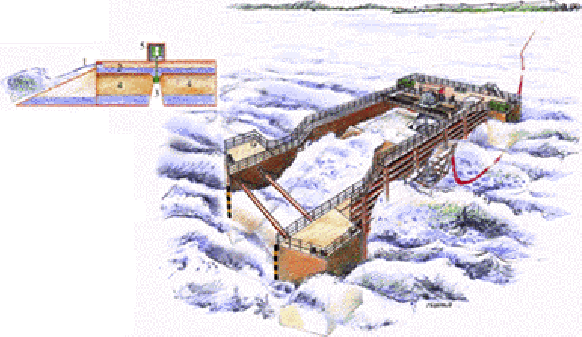
Sweden
An overtopping device with a floating platform that continuously repositions to face incoming waves.
2007: Experimental installations in Sweden since the 1980s, ongoing.
GRAMPUS - Offshore Wave Energy Ltd (OWEL)
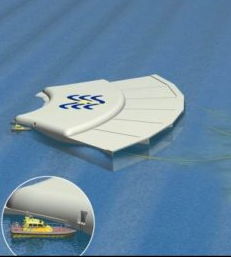
United Kingdom
A floating OWC-type device.
2007: Under scaled experimental study in a test tank.
Seawave Slot Generator (SSG) - WAVEenergy
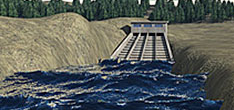
Norway
Stores the potential energy of incoming waves in multiple reservoirs at different heights; turbines at the base of each reservoir generate electricity — suited to nearshore units, breakwaters, or offshore installations.
2007: Under scaled experimental study; a full-scale installation was planned for Kvitsøy Island.
Part II — 19 Years Later: The Reckoning
Only 3 of 17 remain active in their original form. 10 have closed, 1 was “resurrected” as intellectual property under a new company after bankruptcy, while for 3 there is no trace of public activity in years.
But the number doesn't tell the story — how each one closed does. Shipwrecks (Oceanlinx devices sank, twice). Parent companies that shifted priorities (Wavegen didn't close because the technology failed, but because Voith Hydro chose to invest in tidal power instead of wave power). Financial crisis (Wave Dragon never managed to build its planned 7MW project in Wales after 2008).
🟢 The Ones That Held On
Wave Dragon - Denmark
The test unit operated in Denmark until 2010; a planned 7MW project in Wales was never built after the 2008 financial crisis. A new study on a hybrid wave-wind project was published at EWTEC 2025. The company remains in the game.
AWS Ocean Energy (formerly AWS BV) - Scotland
The original Dutch company halted in 2008, but the technology and name carried on through the Scottish AWS Ocean Energy. Backed by Wave Energy Scotland, it tested the “Waveswing,” outperforming predictions by 20%.
Ocean Power Technologies / PowerBuoy - USA
Publicly traded (NYSE American: OPTT). No longer sells power to the grid as it has repositioned entirely around “maritime domain awareness”: PowerBuoys now power sensors and data links for the U.S. Department of Homeland Security, the U.S. Navy, and allied defense customers. The technology survived by switching customers entirely.
https://oceanpowertechnologies.com/
🔴 The Ones That Closed or Vanished
Pelamis Wave Power (Pelamis) - Scotland
Despite the world's first grid-connected offshore wave converter and a genuine commercial wave farm in Portugal (2008), the company went into administration in November 2014, unable to secure further funding. Its IP passed to the Scottish government and then to Wave Energy Scotland.
Energetech → Oceanlinx (Energetech Oscillating Water Column ) - Australia
Energetech was renamed Oceanlinx in 2007. In 2010 the MK3 prototype was successfully grid-connected at Port Kembla — but that same month it broke free of its moorings and sank. In 2014, while its successor prototype, GreenWAVE, was being towed into place, the supporting airbags were damaged and the unit sank again, pushing the company into receivership. In 2016, inventor Tom Denniss founded Wave Swell Energy to carry on the same OWC technology.
Wavegen (OSPREY & LIMPET) - United Kingdom
Acquired by Voith Hydro in 2005. In March 2013 the parent company decided to close Wavegen to focus exclusively on tidal power.
Finavera Renewables (AquaBuoy) - Canada
Formally abandoned wave energy in 2009 to pursue wind projects in Canada and Ireland. In 2016 it pivoted again, this time to solar, renaming itself Solar Alliance Energy Inc.
Ocean Motion International (CES WavePump) - USA
Now classified as “deadpooled.” Patent US 5,411,377 (filed 1993, granted 1995) by Dwight “Hap” Houser and Michael P. Houser. No trace of activity after 2004.
Duquesne Environmental Limited (Wavebob) - Ireland
Despite a successful full-scale deployment in 2006 in Galway Bay, the company closed in 2013, unable to find new funding or a strategic partner.
Embley Energy Ltd. (Sperboy) - United Kingdom
Formally dissolved on 20 October 2020 and having never progressed beyond its 2001 experimental model.
JAMSTEC (Mighty Whale) - Japan
The prototype was retired after the demonstration programme; no updates since.
Lancaster University (PS Frog) - United Kingdom
Remained purely at the theoretical and lab-testing stage — no at-sea deployment ever followed.
OWEL (GRAMPUS) - United Kingdom
Dissolved in 2017, having never progressed beyond the test tank.
Muroran Institute of Technology & Cold-Region Port and Harbor Research Center (Pendulor) - Japan
Remained a purely academic research project at the Muroran Institute; no sign of a commercial spinout.
Seapower AB (Floating Wave Power Vessel) - Sweden
No recent public information could be found.
WAVEenergy (Seawave Slot Generator – SSG) - Norway
The planned full-scale project at Kvitsøy was relocated due to environmental permitting issues and, as far as can be determined, was never built. Development continued only as academic research (Aalborg University) into the early 2010s.
🟡 The Ones That Were “Resurrected”
Seadog Pump → SeaDog Systems, Inc. - USA
The technology was invented by Kenneth W. Welch Jr., with co-inventors Curtis and Harold Rothi. Independent Natural Resources (INRI) commercialised it from 2002–2010, reaching an offshore lease in Texas and a permit from the U.S. Army Corps of Engineers (USACE) via subsidiary Renew Blue and licensee Texas Natural Resources, but went bankrupt around 2010. The story didn't end there, though: the new company SeaDog Systems, Inc. acquired the 8-patent portfolio and is currently raising capital to bring the technology back to market under the SeaDog, Fulcrum, and Artificial Head names.
Part III — The New Players
From 2007 to 2026, the wave energy sector has changed radically. Today roughly 189 wave energy startups are tracked worldwide. Here is a selection of the most notable new entrants.
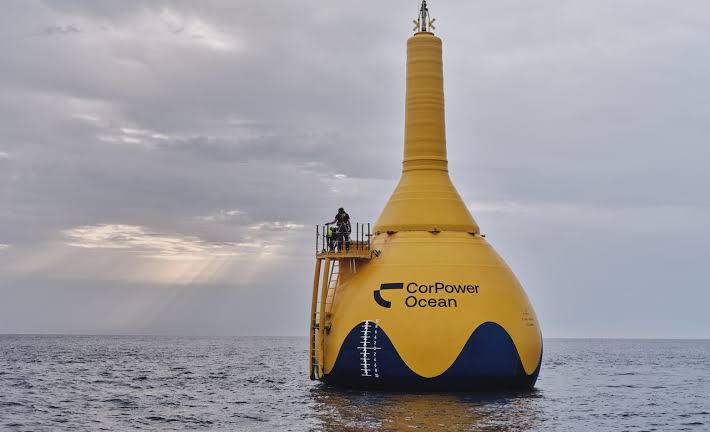
CorPower Ocean (CorPack) - Sweden
Point absorber
Founded in 2009, has raised roughly €95M, with partnerships including EDP, ESB, and TotalEnergies. Commercial-scale deployments are underway in Portugal and Scotland.
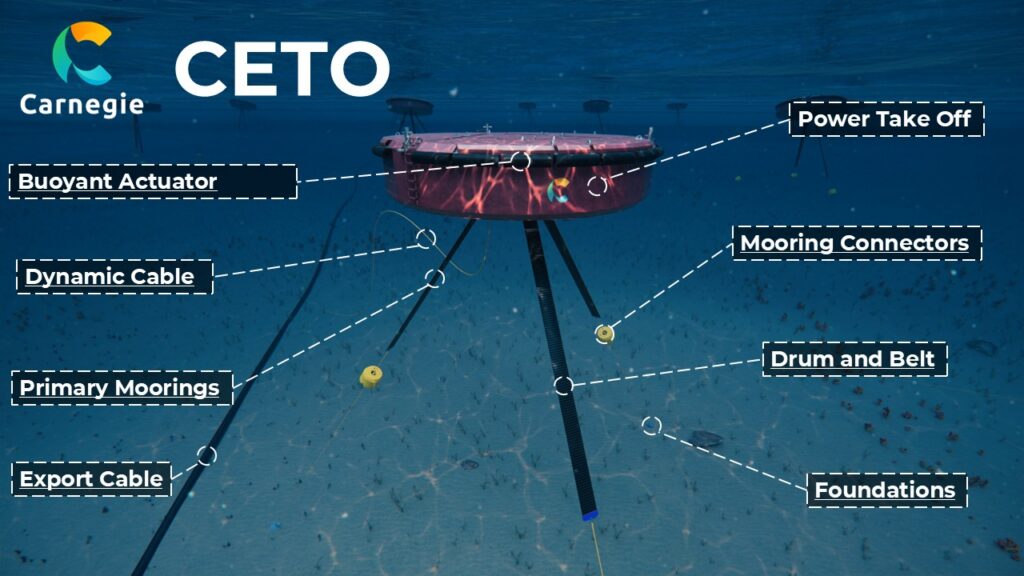
Carnegie Clean Energy (CETO / MoorPower technology) - Australia
Submerged point absorber
A history dating back to 1987, making it one of the sector's most resilient players. Listed on the ASX. Selected as lead technology partner on Horizon Europe's COIN project (€4M), raised AUD 2.1M in September 2025, is deploying a 6MW CETO array in Spain (BiMEP), and is partnering with SKF on power take-off components.
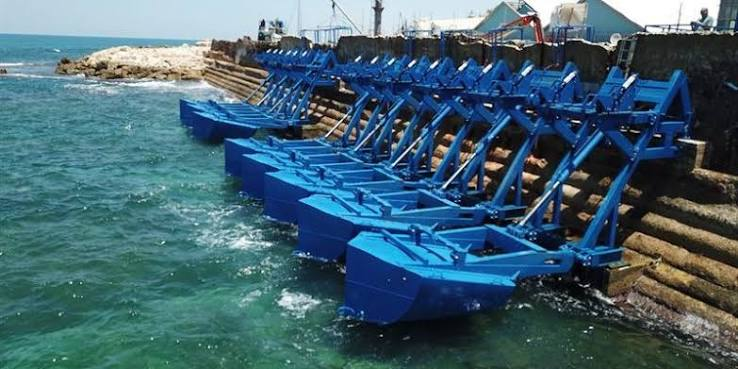
Eco Wave Power (EWP) - Israel / Sweden
Nearshore floaters
Listed on NASDAQ (WAVE). Active pilot project at the Port of Los Angeles; increasingly leaning into a narrative around powering AI data centers.
CalWave Power Technologies (xWave) - USA
Submerged point absorber
Achieved 99% uptime over a 10-month open-ocean pilot off San Diego (2021–22), with zero performance decline — a rare technical achievement in the sector. Next step: an x200 unit at PacWave, Oregon (2026); just signed a power purchase agreement with the Bonneville Power Administration.
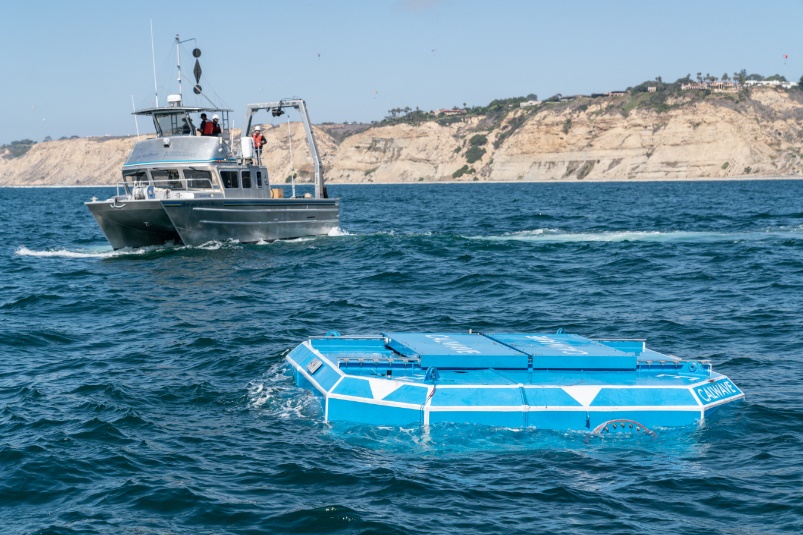
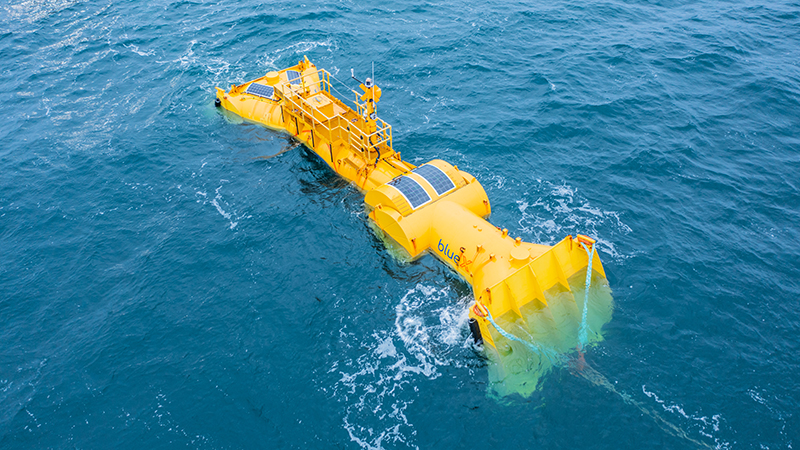
Mocean Energy (Blue X / Blue Star 10) – Scotland
Geometry-Driven Energy Conversion
A modular floating converter; £3M in funding for the full-scale “Blue Horizon 250.”
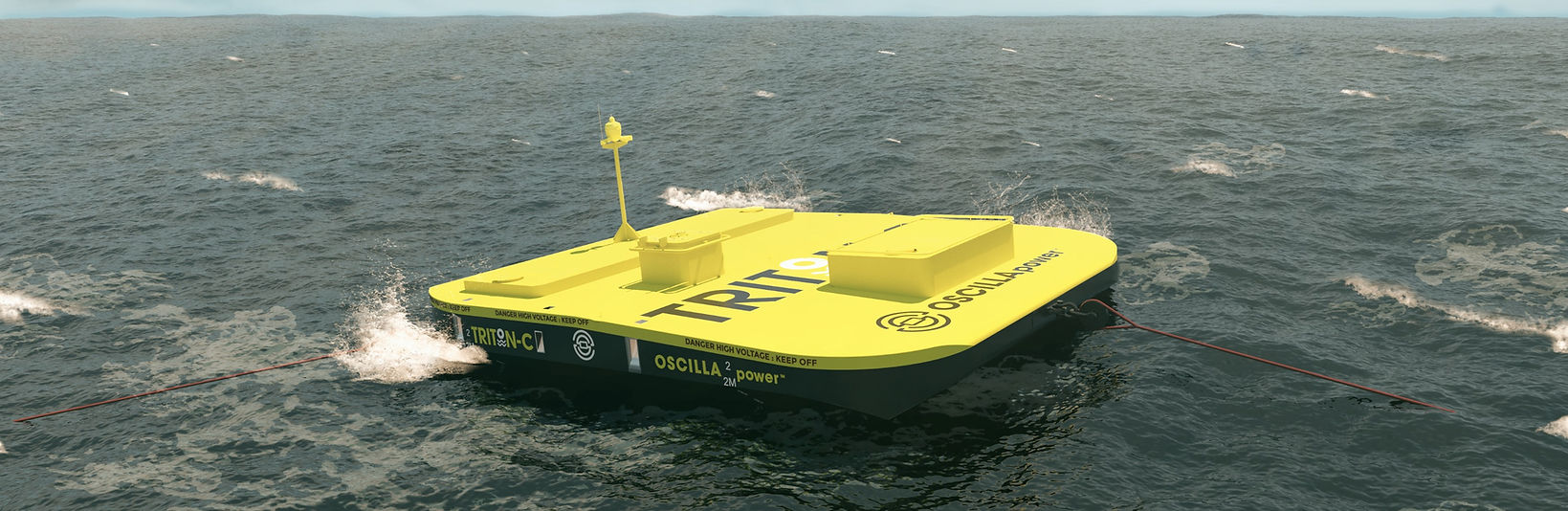
Oscilla Power (TRITON) – USA
Multi-body point absorber
A multi-body point absorber, DOE-funded — competing with OPT and CalWave for defense contracts.
SINN Power – Germany
Modular nearshore offshore
A modular system for nearshore and offshore installations, with a focus on remote islands.
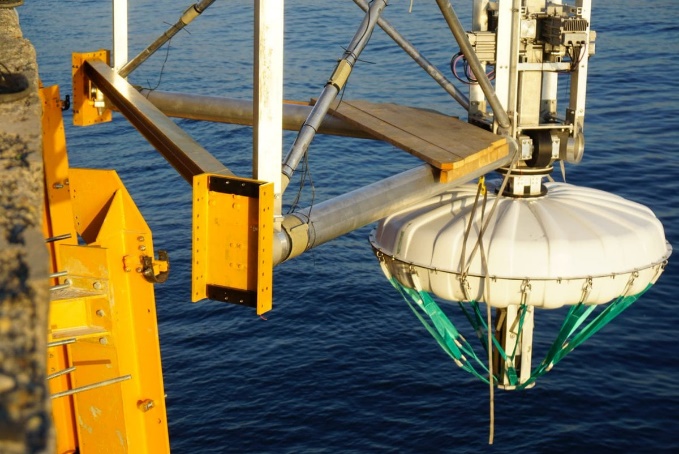
Seabased AB – Sweden
Linear generator point absorber
A point absorber with a linear generator on the seabed.
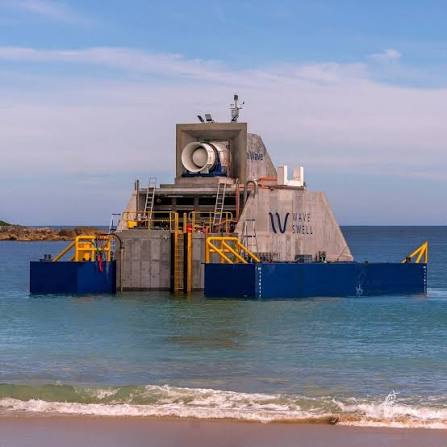
Wave Swell Energy (Uniwave) – Australia
Onshore OWC
A direct technical descendant of the Oceanlinx/Energetech IP — the same core OWC idea, revived by the same inventor, Tom Denniss, a decade after the first collapse
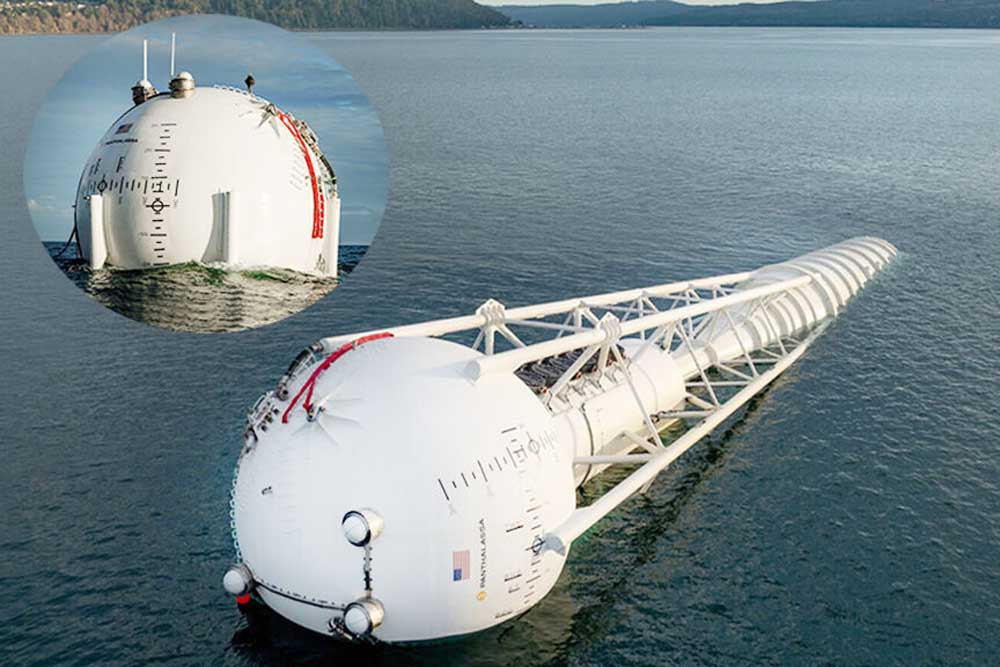
Panthalassa — A Completely Different Vision - USA
Founded in 2016 in Portland / Vancouver, Oregon-Washington, by Garth Sheldon-Coulson (CEO) and Brian Moffat. Its model is to generate wave energy and power a data center on-site, transmitting only data via low-earth-orbit satellites (Starlink/LEO).
In May 2026 it raised $140 million in a Series B round led by Peter Thiel, with participation from Marc Benioff, Max Levchin, Hanwha, and others — pushing its valuation toward $1 billion. After the Ocean-1 and Ocean-2 trials (up to 50kW in Puget Sound), the company is now building Ocean-3 for deployment in the Pacific during 2026, with a commercial target of 2027.
What We Learn From 19 Years of Wave Energy
If I keep one thing from this research, it's not a story of linear failure. It's a survival map with four distinct strategies:
- A change of target customer. Ocean Power Technologies survived not by generating electricity, but by turning its device into a sensor for maritime domain awareness.
- IP resurrection after death. The SeaDog technology found a new owner amid the wreckage of a bankruptcy.
- Technology that outlives its own company. Oceanlinx sank twice, but its own inventor rebuilt it as Wave Swell Energy.
- A radical reinvention of the business model. Panthalassa didn't try to solve the problem of generating power from ocean waves better it changed the question entirely.
In 2007, writing my thesis, I considered wave energy a technology on the verge of maturity. Nineteen years later, I see something more realistic, but also more interesting: a sector that has never managed to “lock in” a single winning design, yet continues to attract engineers, inventors, and bold investment capital, precisely because the problem remains open.
What's Next
This article is my own reading of public information and maybe I've gotten something wrong somewhere. I've already begun reaching out to the people behind these companies, old and new, to correct whatever needs correcting and to answer one simple question: in the end, is wave energy a good, profitable idea or a technological tarpit? Their answers will become the next article.